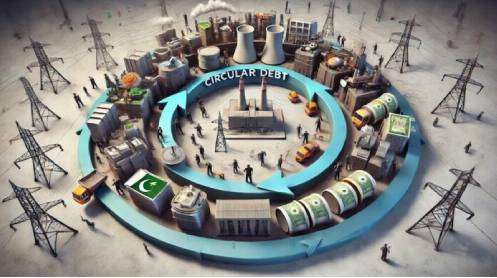
ISLAMABAD: The Economic Coordination Committee (ECC) has underscored the need to gradually move towards a uniform electricity tariff as a key efficiency measure to curb circular debt, which continues to undermine the sustainability of Pakistan’s power sector and affect foreign-funded energy projects.
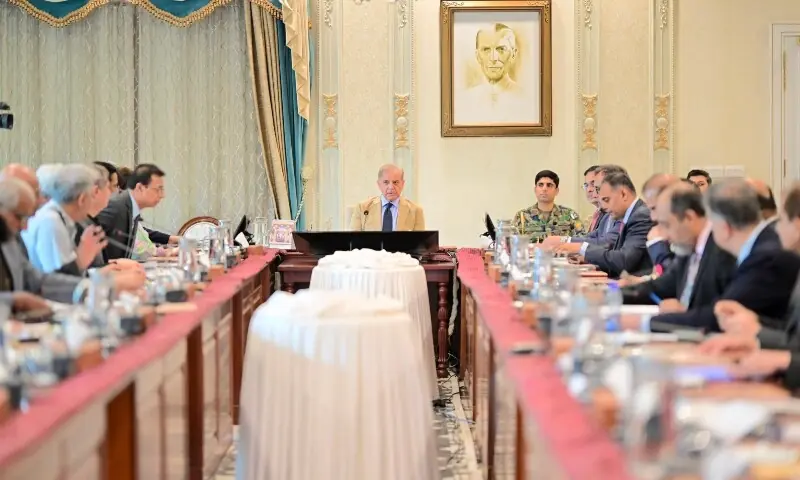
During a recent meeting, the Power Division briefed the ECC on the impact of circular debt on externally financed schemes, while the ECC chair stressed closer coordination between the Power and Petroleum Divisions and the Finance Division to develop a clear road map for debt reduction.
Sources told The Express Tribune that the Power Division presented an overview of the Circular Debt Management Plan (CDMP), noting that recovery targets were aligned with Pakistan’s agreement with the International Monetary Fund (IMF). While IMF targets had been met, the ECC observed that future efforts must focus on efficiency and, as a long-term solution, a phased transition to a uniform tariff structure. The Finance Division also supported the proposal, calling uniform tariffs an important tool for improving sector efficiency.
The ECC called for detailed deliberations on state-owned generation companies (Gencos) and independent power producers (IPPs) undergoing privatisation. The Power Division informed the forum that a privatisation schedule for Gencos 4 to 6 was being finalised, which would help clear outstanding liabilities.
Briefing the meeting, the Ministry of Energy (Power Division) said the government was continuously working to address the sector’s multidimensional challenges, particularly the circular debt, which stood at Rs1,614 billion at the end of FY25. Despite multiple reform measures, the debt continued to accumulate, highlighting the need to control debt flows through efficiency improvements.
The ministry recalled that circular debt flows stood at Rs57 billion in FY23 and Rs83 billion in FY24, while turning negative at Rs780 billion in FY25. Debt accumulation was attributed to poor bill recoveries, line losses exceeding regulatory targets, unpaid subsidies, delayed government payments and K-Electric’s transition costs.
The previous fiscal year saw a notable reduction in debt flow due to improved performance of distribution companies (DISCOs), stronger corporate governance and one-off payments following the renegotiation of power purchase agreements.
To sustain this momentum, the government has prepared the CDMP 2025-26 to reduce circular debt flows to a manageable level. The plan focuses on efficiency improvements, minimising new debt accumulation and gradually reducing the existing stock by phasing out obligations to power producers. Gaps in cost recovery and reliance on expensive power are to be addressed through operational efficiencies, while the Finance Division committed to budgeting and releasing subsidies in a timely manner.
In the medium to long term, the CDMP covers areas such as cost-reflective tariffs, resource availability, changes in commercial operation dates of new plants, cost recovery, exchange rate volatility, inflation and fluctuations in imported coal and crude oil prices—all of which significantly affect power purchase costs.
Based on revised assumptions, the Power Division has set a new trajectory for power purchase price forecasting for FY26, aligned with sector revenue requirements. The base-case circular debt flow for FY26 is estimated at Rs74.5 billion, which the CDMP aims to reduce to zero through timely tariff adjustments, loss reduction, improved DISCO performance and targeted fiscal support.
Story by Zafar Bhutta